

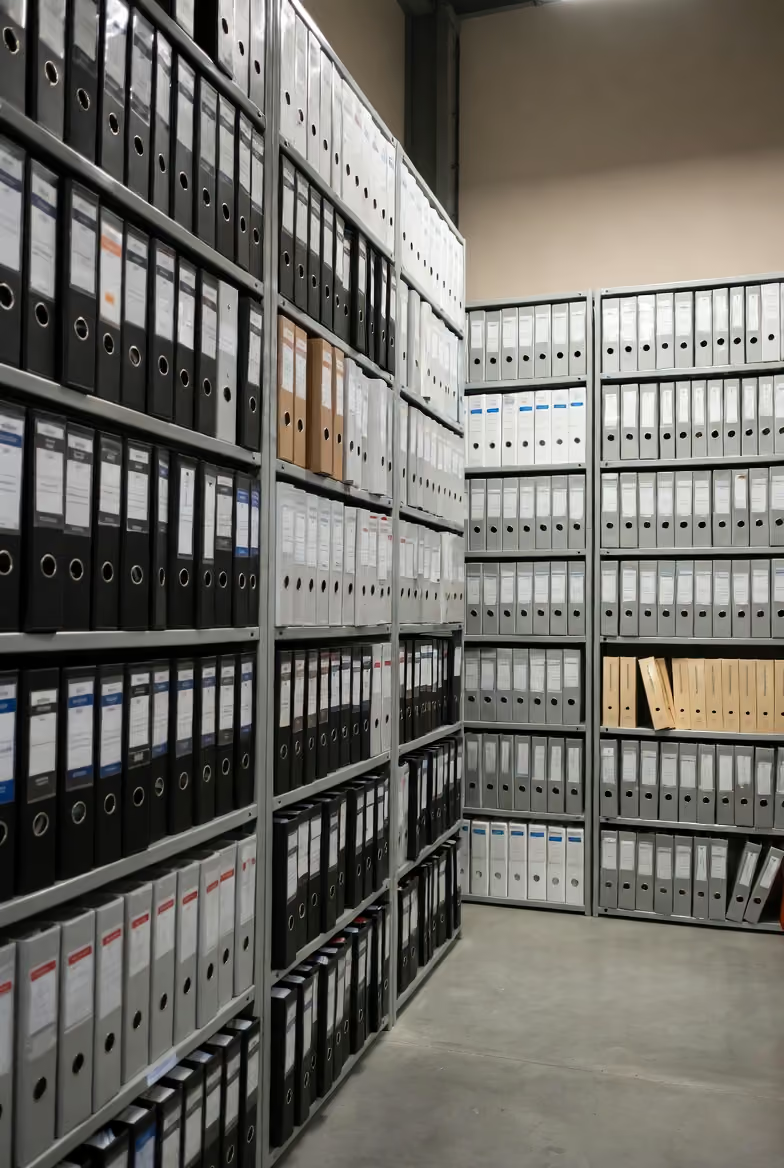
For many fuel retail networks, the notice of an upcoming audit triggers a familiar and frantic ritual: scrambling to locate binders, back-fill logbooks, and assemble a version of compliance history that looks presentable.
This approach — preparing for an audit — is one of the most dangerous fallacies in modern compliance management.
An audit is not an exam you can cram for. It is a snapshot taken at a moment in time, designed to test the integrity of your everyday operational systems. A last-minute rush to get organised does not impress regulators. It demonstrates a lack of systemic control.
Leading fuel brands understand this reality. They operate in a state of continuous audit readiness, where every day is audit day. This is not about perfection — it is about maintaining a permanently defensible system of record that can withstand scrutiny at any moment, announced or not.
Why “Preparing for Audits” Is a Failed Strategy
Relying on a reactive, event-based approach to audit preparation exposes fuel retail networks to significant and often compounding risk.
First, it fails the test of unannounced inspections. While some EPA audits are scheduled, many regulatory interactions are not. SafeWork inspections following complaints, council checks, or post-incident site visits occur without notice. If compliance evidence is scattered across incomplete logbooks or personal inboxes, there is no credible way to demonstrate real-time due diligence. A system that requires “preparation” is, by definition, not compliant in the moment it matters most.
Second, it creates unreliable — and sometimes fraudulent — records. The pressure to prepare often leads to back-dated forms and reconstructed logs. Regulators and investigators are trained to detect this behaviour. Identical handwriting, uniform timestamps, and pristine pages where daily use is expected immediately undermine credibility. What could have been a minor non-compliance can escalate into allegations of deliberate misrepresentation.
Finally, it cannot withstand post-incident investigation. After a serious event — a fuel spill, fire, or workplace injury — there is no opportunity to prepare. The records that exist at that moment are the only evidence available. If a business cannot produce time-stamped proof that inspections, maintenance, or emergency procedures were conducted as required, the absence of historical evidence may be interpreted as negligence.

Continuous Audit Readiness Requires Always-On Evidence
Continuous audit readiness is achieved when compliance evidence is created automatically as part of daily operations — not as a separate administrative exercise.
For environmental audits, this means being able to instantly produce a complete and unbroken history of Underground Petroleum Storage System (UPSS) records — fuel reconciliation, leak detection, groundwater monitoring, and maintenance — without searching for binders or reconciling spreadsheets.
For safety inspections, it means demonstrating that procedures are actively implemented, not merely documented. A traffic management plan for tanker deliveries is no longer a static PDF, but a live process supported by time-stamped records showing exclusion zones cleared and controls in place immediately before each delivery.
For ad-hoc regulator requests, continuous readiness allows rapid, accurate responses. Whether asked for hazardous chemical registers across a region or maintenance records for specific assets, a system of record can generate reliable reports in minutes — a capability that significantly builds regulator confidence.
Permanent Defensibility During Incidents and Claims
The true value of continuous audit readiness becomes evident during incidents and legal claims.
Following an alleged slip-and-fall, for example, a business operating with a system of record can immediately retrieve site-specific safety inspection records, including time-stamped photos showing the forecourt condition hours before the incident. This level of immutable evidence can materially change the outcome of investigations and liability assessments.
Rather than reacting defensively, enterprises with permanent audit readiness respond with clarity, speed, and confidence. Evidence is not reconstructed — it already exists, preserved exactly as it was created.
At enterprise scale, this capability separates organisations that manage compliance episodically from those that govern risk systematically.
Audit readiness is not a project to be managed. It is an operational state to be maintained.
By moving away from reactive audit preparation and toward permanent defensibility, leading fuel brands reduce regulatory exposure, strengthen their legal position, and build lasting trust with regulators.
Platforms like Vertex Pulse enable this approach by ensuring compliance evidence is continuously generated, centrally retained, and immediately accessible — turning audit readiness from a periodic scramble into a permanent, enterprise-grade asset.